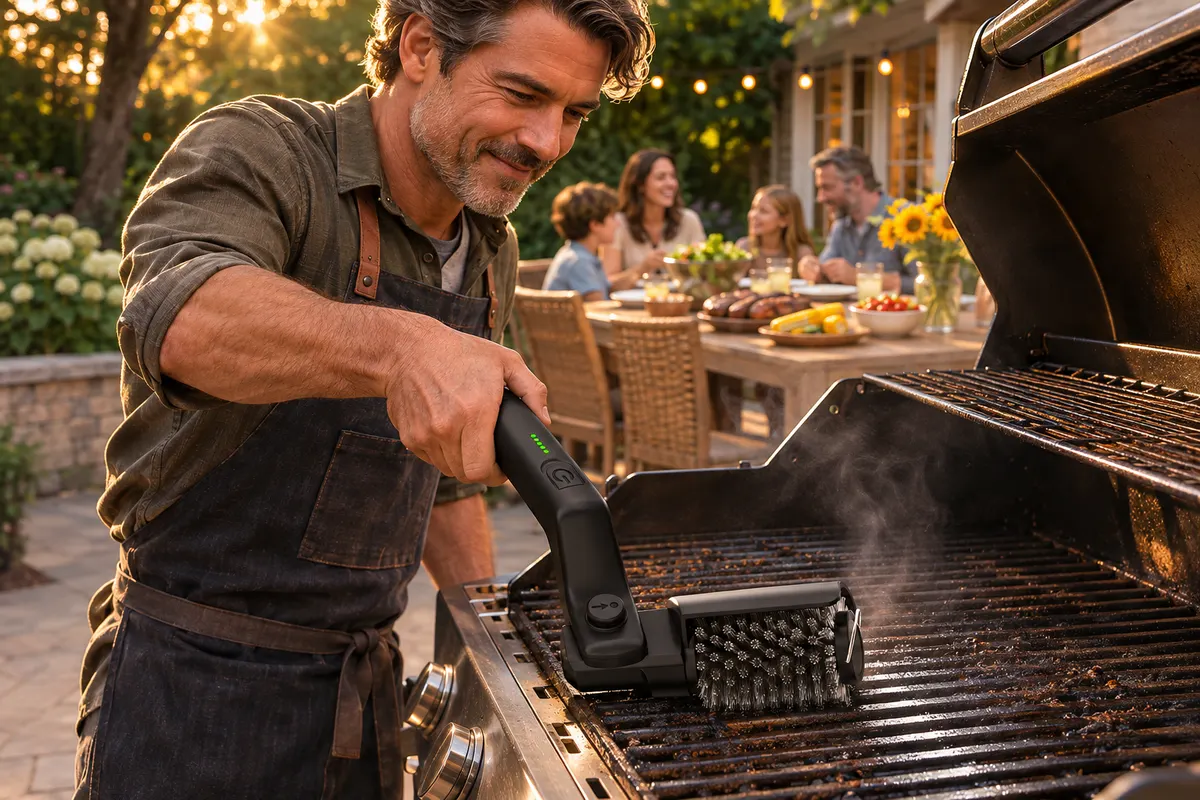
A clean grate is the cheapest upgrade you can make to your grilling. Food releases instead of sticking, grill marks come out sharp, and you stop tasting last week’s salmon on tonight’s chicken. It also matters for safety: the National Fire Protection Association (NFPA) has repeatedly named failure to clean the grill as the leading contributing factor in home grill fires, because built-up grease is fuel.
The good news is that most of the work happens in two short routines. One takes five minutes after every cookout, the other takes about an hour a few times a season.
What you need
- A grill brush you trust (manual or electric) and a plastic or wooden scraper for heavy crust.
- Heat-resistant gloves and long tongs.
- Paper towels or a lint-free cloth, plus a high-smoke-point oil such as canola or vegetable oil.
- For the deep clean: dish soap, baking soda, a bucket or large tub and a non-scratch sponge.
The 5-minute routine after every cookout
- Heat the grill for 10 to 15 minutes Run it on high with the lid closed. Leftover food and grease turn to dry, brittle carbon that is far easier to remove.
- Turn it off and brush while warm Brush along the length of the grates and then across, paying attention to the edges near the walls. Use gloves and follow your brush maker’s instructions on temperature.
- Wipe the grates Fold a damp paper towel, hold it with tongs and run it over the grates. This picks up loose debris and lets you see that the surface is clear.
- Oil lightly Dip a folded paper towel in oil, hold it with tongs and wipe a thin coat over the grates. This helps food release next time and protects cast iron from rust.
- Empty or check the grease tray A full tray or drip pan is one of the most common sources of flare-ups. Scrape it out when it is cool.
Many people prefer to do the heat-and-brush step before cooking instead of after. Both work. The important part is that the grates are warm and the residue has been burned dry. Seeing black flakes on the lid? Here is what the black flakes on your grill are and how to clean each type of buildup.
The deep clean, a few times per season
Every so often, the grates need more than a brush. Plan a deep clean at the start of the season, mid-summer and before storing the grill for winter (our winter grilling tips and 12-month grill care calendar spreads these jobs across the year).
- Shut off the fuel and let everything cool Close the propane valve or disconnect the tank on a gas grill. On a charcoal grill, make sure the ashes are fully cold.
- Remove the grates and soak them Put them in a tub of hot water with dish soap for 30 to 60 minutes. A bathtub lined with an old towel works for large grates.
- Treat stubborn spots with baking soda Spread a paste of baking soda and a little water on the worst areas, leave it for about 15 minutes, then scrub with a non-scratch sponge or brush.
- Clean the inside of the grill While the grates soak, scrape the inside walls, brush off the burner covers or flavorizer bars and empty the grease tray and ash catcher.
- Rinse, dry completely and oil Rinse off all soap, dry the grates thoroughly, put them back and run the grill for 10 minutes before a light coat of oil.
What changes by grate type
| Grate | Everyday cleaning | Deep clean | Watch out for |
|---|---|---|---|
| Stainless steel | Brush warm, wipe, oil | Soap soak, baking soda paste | Discoloration from heat is normal and harmless |
| Cast iron (bare) | Brush warm, wipe, oil every time | Short wash only, dry right away | Rust if left wet; re-season with oil |
| Porcelain-enameled | Brush warm, wipe | Soap soak, non-scratch sponge | Chips in the coating; check your grill manual for recommended tools (see how to clean porcelain grill grates) |
| Wire / mesh racks | Brush both directions | Soak, then brush | Grease trapped between strands |
| Flat-top griddle | Scrape warm, wipe, oil | Scrape, water on warm surface, re-season | Do not soak; it needs its seasoning layer |
Gas vs. charcoal: the parts people forget
Gas grills collect grease on the flavorizer bars or burner covers and in the drip tray. Brush the bars when you deep clean and keep burner ports clear so the flame stays even. If you smell gas, turn everything off and check the connections before you go further.
Charcoal grills collect ash, which holds moisture and speeds up rust. Empty the ash once it is completely cold, and brush the charcoal grate as well as the cooking grate.
Safety checks that take ten seconds
- Look before you cook. After a CDC report on six patients in Providence, Rhode Island, who swallowed wire bristles from grill-cleaning brushes (MMWR, 2012), the agency suggested inspecting the grill surface before cooking. The damp-paper-towel wipe in step 3 handles that.
- Retire worn-out manual brushes. If the bristles on an old wire brush are bent, flattened or loose, replace it.
- Never use harsh chemicals on a hot grill. Oven cleaners and similar products need a cold grill, gloves and a thorough rinse, and some grill makers advise against them.
- Keep the grease under control. A clean tray and clean grates are your best protection against flare-ups.
Common mistakes
- Brushing a cold, greasy grate. Cold fat smears instead of lifting. Heat first.
- Leaving cast iron wet. Rust can appear overnight. Dry and oil every time.
- Skipping the edges and corners. That is where buildup starts. Angle the brush or use a tool that folds to reach them.
- Waiting until the end of the season. A five-minute routine after each cookout saves you an hour of scrubbing later.
Our recommendation: Joyhnny CleanLock
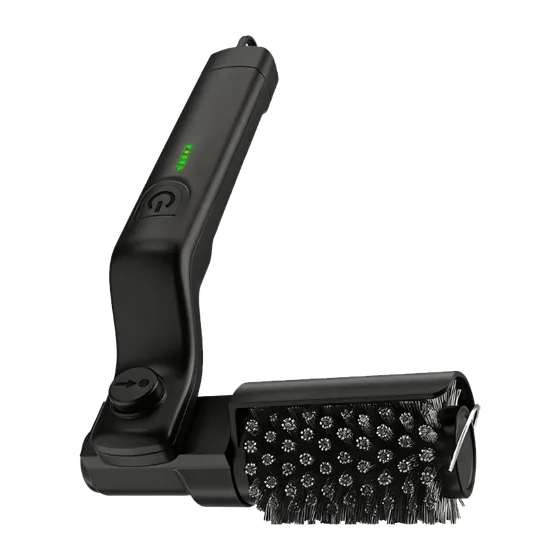
The routine above is simple, but step 2 is where most people lose patience: bending over warm grates and scrubbing until the crust finally lets go. That is the step we would hand to a motor.
The Joyhnny CleanLock Grill Brush pairs a high-torque motor with a 360° rotating brush head, so you guide it along the grates instead of scrubbing. The adjustable, foldable head reaches corners, the reinforced steel bristles are anchored to prevent shedding, and it charges by USB-C. On the official site it costs $69.99 for one brush (half the regular $139.98) and drops to $37.49 per brush in the 4-pack, with fast shipping and a 30-day money-back guarantee.
Want the details first? Our full Joyhnny CleanLock review covers specs, the comparison with manual tools, prices with shipping and our 4.7/5 verdict.
Frequently asked questions
How often should you clean grill grates?
Give the grates a quick brush every time you grill, ideally while they are still warm, and plan a deeper clean with soap and water a few times per grilling season, or whenever you see heavy buildup.
Is it better to clean grill grates hot or cold?
Warm works best for the quick routine: heat loosens grease and turns food residue to brittle carbon that brushes off easily. For a deep clean with soap and water, let the grates cool completely and remove them first.
Can you clean grill grates with baking soda and vinegar?
Yes. A paste of baking soda and a little water spread on cooled grates for about 15 minutes, then scrubbed and rinsed, lifts stubborn residue. A splash of vinegar can help loosen grime. Rinse well and dry the grates fully afterward.
How do I keep cast iron grates from rusting?
Dry them completely right after washing (a few minutes on a warm grill works), then wipe on a thin coat of high-smoke-point cooking oil. Avoid long soaks in water.