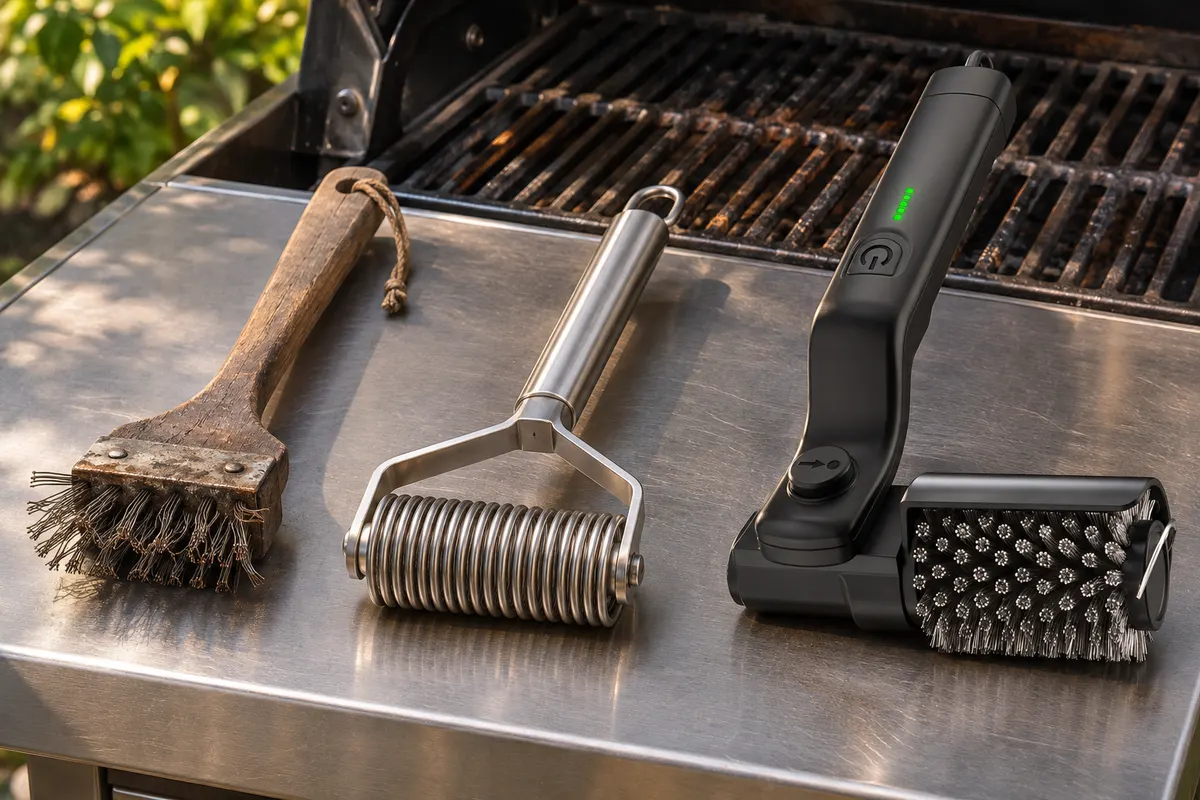
Every summer the same question comes back around the grill: is the old wire brush safe, and is a bristle-free brush actually any good? A third option has joined the debate too: electric brushes with a spinning head. Each one makes a different trade-off between cleaning power, effort and peace of mind. Here is what the evidence says and how to pick.
Where the wire-bristle worry comes from
Two sources are behind most of the headlines:
- The CDC report (2012). In Morbidity and Mortality Weekly Report, the CDC described six patients treated in Providence, Rhode Island, between March 2011 and June 2012 after swallowing wire bristles from grill-cleaning brushes. Injuries ranged from the throat to the intestines, and some patients needed surgery. The report suggested inspecting the grill surface before cooking and considering alternative cleaning methods.
- The national ER study (2016). Researchers from the University of Missouri, writing in Otolaryngology–Head and Neck Surgery, used the national emergency-department injury database to estimate about 1,700 visits for wire-bristle injuries in the US from 2002 to 2014, with most cases in summer and the peak in July. They called these injuries uncommon but seasonal.
The takeaway is balanced: loose bristles are a real but uncommon risk, and they come mostly from brushes whose bristles have worn or loosened. That is why the design of the bristles matters as much as the type of brush.
The three types, explained
Classic wire brush
Brass or stainless steel bristles twisted into a handle. Steel scrubs baked-on grease very effectively, which is why so many grillers still reach for one. The downside is wear: with use and heat, bristles can bend, flatten and work loose, so these brushes need regular inspection and replacement.
Bristle-free brush
Coiled stainless steel, a scraper blade, a grill stone or a nylon head designed for cool grates. They remove the bristle concern entirely. Many reviewers note they ask for more elbow grease on heavy buildup, and some scraper styles fit only certain grate spacings.
Electric brush
A battery-powered handle that spins the brush head, so the motor does the scrubbing instead of your arm. Designs vary: some use bristle-free heads, others use steel bristles that are anchored into the roller. The appeal is speed and low effort, which adds up for people who grill several times a week.
Side-by-side comparison
| Wire brush | Bristle-free (coil / scraper / stone) | Electric brush | |
|---|---|---|---|
| Cleaning power on baked-on grease | High | Moderate, more passes | High, motor-driven |
| Effort | High | High | Low |
| Loose-bristle concern | Yes, grows with wear | None | None, or bristles anchored by design |
| Reaches corners | Partly | Partly | Yes with a folding head |
| Maintenance | Inspect and replace often | Stones wear down; coils trap grease | Charge, knock debris off the head |
| Typical cost | Low | Low to mid | Higher up front |
How to choose
- Count how often you grill Once or twice a summer, a manual tool is fine. Every weekend or more, the time and effort saved by a motor become noticeable.
- Look at your grates Heavy cast iron and stainless grates handle steel well. For porcelain-enameled grates, check your grill manual for recommended tools.
- Decide how you feel about bristles If loose bristles are your main worry, choose bristle-free or a design that anchors its bristles, and keep the wipe-down habit either way.
- Check the reach Most buildup hides in corners and along the edges. A head that angles or folds makes a real difference.
- Think about your arms Sore shoulders or wrists after scrubbing are a good reason to let a motor take over.
Brushing habits that matter with any brush
- Heat first, brush warm. Dry carbon releases far more easily than cold grease.
- Wipe after brushing. A damp paper towel held with tongs picks up debris and lets you see the grate is clear, which is the CDC’s inspect-before-you-cook advice in practice.
- Replace worn manual brushes. Bent, flattened or loose bristles mean it is time.
- Store the brush dry. Hang it rather than leaving it on the side table in the rain.
For the full cleaning routine, including the seasonal deep clean, see our guide on how to clean grill grates.
Sources
- CDC. Injuries from Ingestion of Wire Bristles from Grill-Cleaning Brushes — Providence, Rhode Island, March 2011–June 2012. MMWR 2012;61(26):490–492.
- Baugh TP, Hadley JB, Chang CWD. Epidemiology of Wire-Bristle Grill Brush Injury in the United States, 2002–2014. Otolaryngology–Head and Neck Surgery 2016;154(4):645–649. DOI: 10.1177/0194599815627794.
Our recommendation: Joyhnny CleanLock
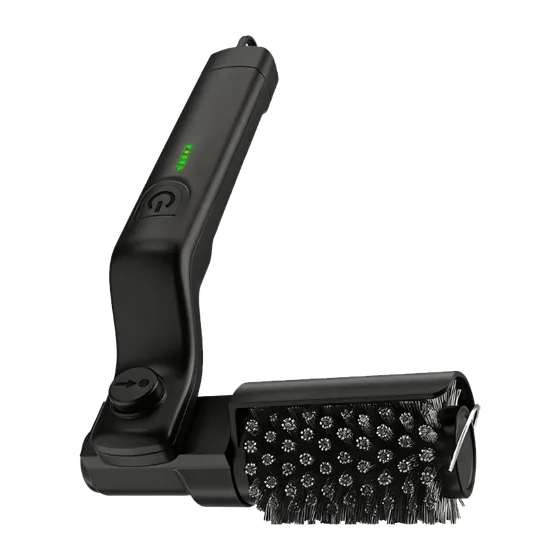
If you want steel’s scrubbing power without the hand scrubbing, and with bristles designed to stay put, an electric brush with anchored bristles is the best of both. This is the one we recommend.
The Joyhnny CleanLock Grill Brush pairs a high-torque motor with a 360° rotating brush head, so you guide it along the grates instead of scrubbing. The adjustable, foldable head reaches corners, the reinforced steel bristles are anchored to prevent shedding, and it charges by USB-C. On the official site it costs $69.99 for one brush (half the regular $139.98) and drops to $37.49 per brush in the 4-pack, with fast shipping and a 30-day money-back guarantee.
Want the details first? Our full Joyhnny CleanLock review covers specs, the comparison with manual tools, prices with shipping and our 4.7/5 verdict.
Frequently asked questions
Are wire grill brushes dangerous?
They can be if bristles break off and stick to the grates. A CDC report described six people in Rhode Island injured after swallowing wire bristles (2012), and a 2016 study estimated about 1,700 US emergency-room visits from wire-bristle injuries between 2002 and 2014. The risk is uncommon, but inspecting the grates and replacing worn brushes are sensible habits.
Do bristle-free grill brushes clean as well as wire brushes?
Many testers find that coil and scraper-style bristle-free brushes need more effort on heavy, baked-on grease than steel bristles. They are popular because they remove the loose-bristle concern.
Are electric grill brushes worth it?
If you grill often, yes for most people. A motor-driven head does the scrubbing for you, which saves time and effort every cookout. Look for a design that reaches corners and, if it uses steel bristles, one that anchors them securely.
What is the safest way to clean grill grates?
Heat the grill to loosen residue, brush while the grates are warm, then wipe the surface with a damp paper towel held in tongs so you can see it is clear before you cook.