The quick answer
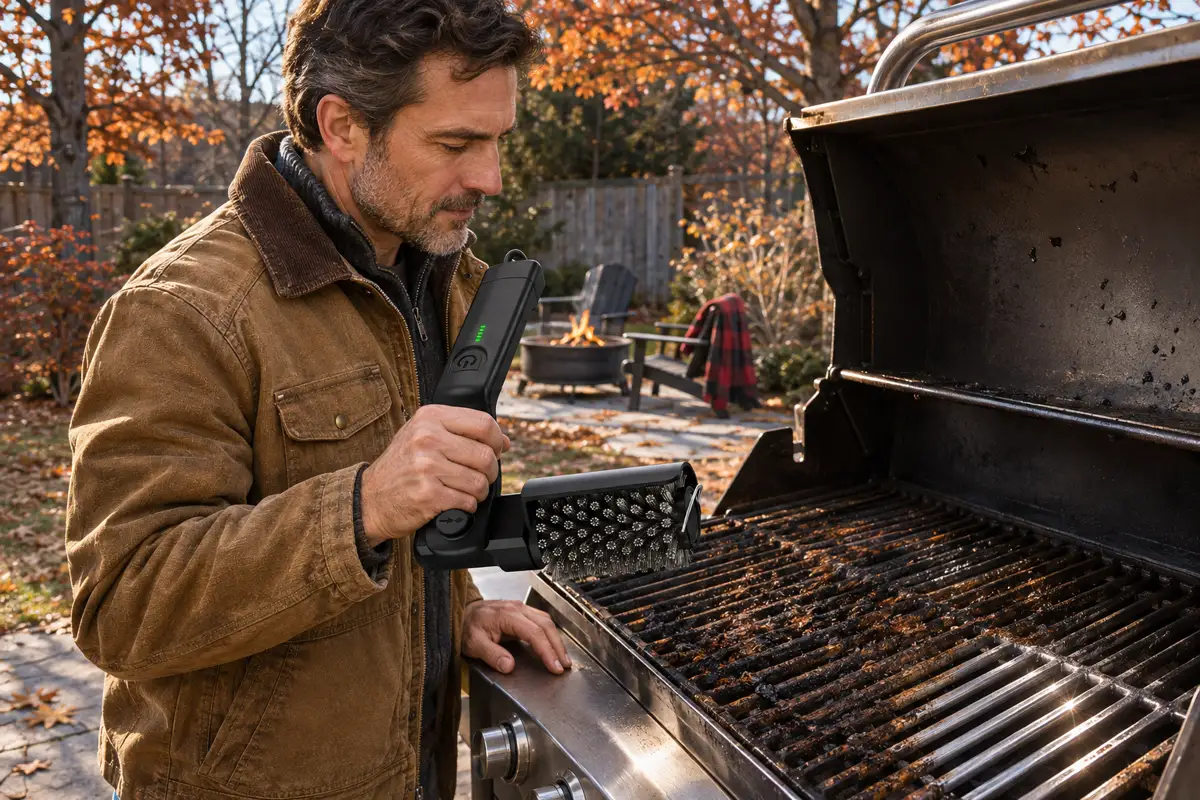
Black flakes on the inside of a grill lid are almost always carbonized grease, not paint. Grill buildup comes in five main types: fresh grease (soft, sticky), carbon (hard black crust and flakes), burnt sugar and sauce (shiny, glassy patches), rust (orange-brown, on cast iron or steel) and peeling enamel or paint (usually outside or on damaged coating). Brush grease and carbon while the grill is warm, soak burnt-on sauce, scrub, dry and oil rust, and stop scraping where a coating is actually peeling.
Open the lid, and there they are: dark flakes stuck to the inside, a few already on the grates. It looks like the grill is falling apart. Usually it is not. What you are seeing is one of several kinds of buildup that every grill collects, and each one has a different cause and a different fix. Scrub them all the same way and you can waste an afternoon, or damage a porcelain coating that did not need it.
This guide sorts grill grime into five types, explains how to recognize each one, and gives the right cleaning method for every type, plus a few habits that keep it from coming back.
The 5 types of grill buildup at a glance
| Type | Signs | What changes in the clean |
|---|---|---|
| Fresh grease | Soft, sticky, shiny film on grates and the drip tray | Brush while warm; empty the grease tray |
| Carbon (carbonized grease) | Hard black crust on grates; black flakes peeling inside the lid | Brush when cool (lid) or hot (grates); scrape off loose flakes |
| Burnt sugar and sauce | Glassy, dark patches where marinades or BBQ sauce dripped | Heat to char, then brush; soak grates if it stays |
| Rust | Orange-brown spots on cast iron or steel grates | Scrub, wash, dry completely, oil and heat |
| Peeling enamel or paint | Chips that expose bare metal, usually on damaged coating or outside the grill | Stop scraping that area; check with the maker |
1. Fresh grease
Every cookout leaves fat on the grates, the flavorizer bars and the drip tray. While it is fresh and warm it is soft and comes off easily, which is why the best time to clean is right after cooking. Left alone, it becomes the food for the next type of buildup, and it is also a fire risk: the National Fire Protection Association lists failure to clean as a leading factor in grill fires. Empty and clean the grease tray regularly.
2. Carbon: the black flakes
This is the one that worries people. Weber’s own explanation, in an article fittingly called It Ain’t Paint, is that grease and smoke vapors slowly turn into carbon and deposit on the inside of the lid, where they eventually peel off as flakes. They are nontoxic, but you do not want them falling on your burgers.
- On the lid: with the grill off and cool, brush the inside of the lid, then wipe with a damp paper towel. Weber suggests soap and water while the lid is warm, not hot.
- On the grates: preheat for 10 to 15 minutes to loosen the crust, then brush.
- Prevention: a quick wipe of the lid every few cookouts stops thick layers from forming.
3. Burnt sugar and sauce
Sweet marinades and BBQ sauce caramelize, then turn into hard, glassy patches that brushing alone barely touches. Burn them off with a hot preheat until they turn to dry char, then brush. If they survive, remove the grates and soak them in hot soapy water, and use a paste of baking soda and water for stubborn spots. Our guide to how to clean grill grates covers the full seasonal deep clean.
4. Rust
Orange-brown spots on cast iron or carbon steel grates mean moisture sat on bare metal, often after winter or a rainy week with no cover. Light surface rust is fixable: scrub it with a stiff brush, wash with soapy water, dry completely, coat with a thin layer of high-smoke-point oil and heat the grill to set it. If the metal is pitted, flaking or thin, replace the grates. Brushing hot grates and running the grill a few minutes after cleaning to drive off moisture prevents most rust; see our winter grilling tips for cold-season care.
5. Peeling enamel or paint
This is the only type that really is the grill coming apart. Porcelain-enameled grates can chip if they are dropped or scraped hard, and the high-heat paint on the outside of some grills can blister and peel after years of weather. The clue is what is underneath: real peeling exposes bare or rusty metal. Stop aggressive scraping on that area, and check the maker’s care instructions; our guide on cleaning porcelain grill grates explains which brushes each maker approves.
How to identify what is on your grill
- Check where it is. Inside the lid and on the grates points to carbon; outside the grill points to paint.
- Touch it (cool grill). Sticky is grease; crumbly is carbon; glassy is burnt sugar.
- Look at the color. Black is carbon; orange-brown is rust.
- Look underneath. Normal metal or enamel under a flake means carbon; bare metal means a damaged coating.
- Match the method. Use the table above, and always follow your grill maker’s instructions.
Why most buildup gets worse: the brushing step
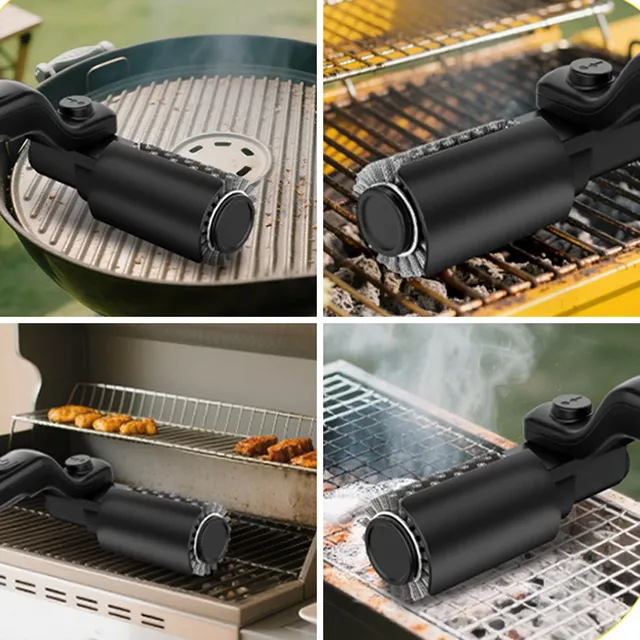
Almost every type of grime starts as fresh grease that was not brushed off while it was soft. People skip it because hand scrubbing a hot grill is tiring, the old wire brush is shedding, and the cookout is over. That is where a powered brush earns its place: the Joyhnny CleanLock turns the after-cook clean into a quick pass, so grease never gets the chance to become carbon.
Our recommendation: Joyhnny CleanLock
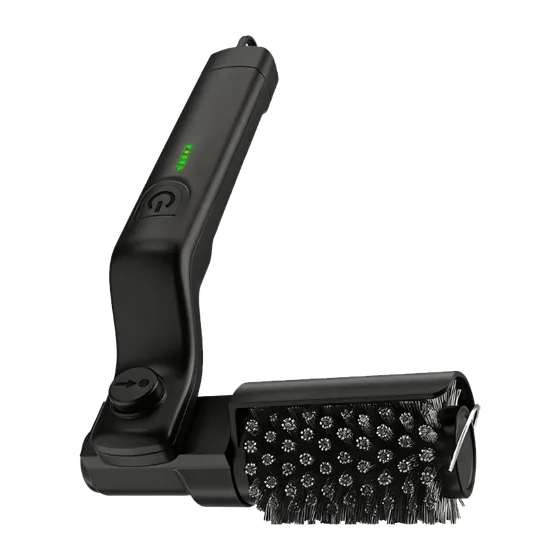
For keeping every type of grill buildup under control, the Joyhnny CleanLock is the brush we recommend. Grease and carbon are best removed often and early, and its motor and rotating head make that two-minute pass after each cookout easy, on the grates and on the inside of the lid. On stainless steel and cast iron grates it lifts carbon crust and burnt-on sauce with far less effort than hand scrubbing; on porcelain grates, follow your grill maker’s guidance on steel bristles.
The Joyhnny CleanLock Grill Brush pairs a high-torque motor with a 360° rotating brush head, so you guide it along the grates instead of scrubbing. The adjustable, foldable head reaches corners, the reinforced steel bristles are anchored to prevent shedding, and it charges by USB-C. On the official site it costs $69.99 for one brush (half the regular $139.98) and drops to $37.49 per brush in the 4-pack, with fast shipping and a 30-day money-back guarantee.
Want the details first? Our full Joyhnny CleanLock review covers specs, the comparison with manual tools, prices with shipping and our 4.7/5 verdict.
Frequently asked questions
What are the black flakes on my grill lid?
In most cases they are carbonized grease, not paint. Weber explains that grease and smoke vapors slowly turn into carbon and build up on the inside of the lid, then peel off in flakes. They are nontoxic, but they can fall on your food, so brush or wipe the inside of the lid regularly.
How do I tell carbon flakes from peeling paint?
Carbon flakes are on the inside of the lid, are black and crumbly, and the metal underneath looks like normal metal or enamel. Peeling paint usually happens on the outside of the grill, often after high heat or weather, and leaves bare or rusty metal underneath.
Is it safe to grill with black flakes inside the lid?
The flakes themselves are carbonized grease, but you do not want them falling on food. Brush the inside of the lid with a grill brush when the grill is cool, wipe it with a damp paper towel and repeat every few cookouts to keep it from building up.
How do you remove rust from grill grates?
For light surface rust on cast iron or steel grates, scrub with a stiff brush, wash with soapy water, dry completely and coat with a thin layer of high-smoke-point oil, then heat the grill to set it. Deep pitting or flaking metal means the grates should be replaced.
What is the easiest way to keep grill grates clean?
Brush the grates while they are still hot after every cookout, empty the grease tray regularly and do a deeper clean a few times a season. Small, regular cleanings stop grease from turning into hard carbon.
Sources: Weber, “It Ain’t Paint” (carbonized grease on the inside of the lid, nontoxic, brush and wipe when cool or warm); National Fire Protection Association (NFPA), grilling safety (keep grills clean, remove grease buildup). Always follow your grill maker’s cleaning instructions.