Quick answer
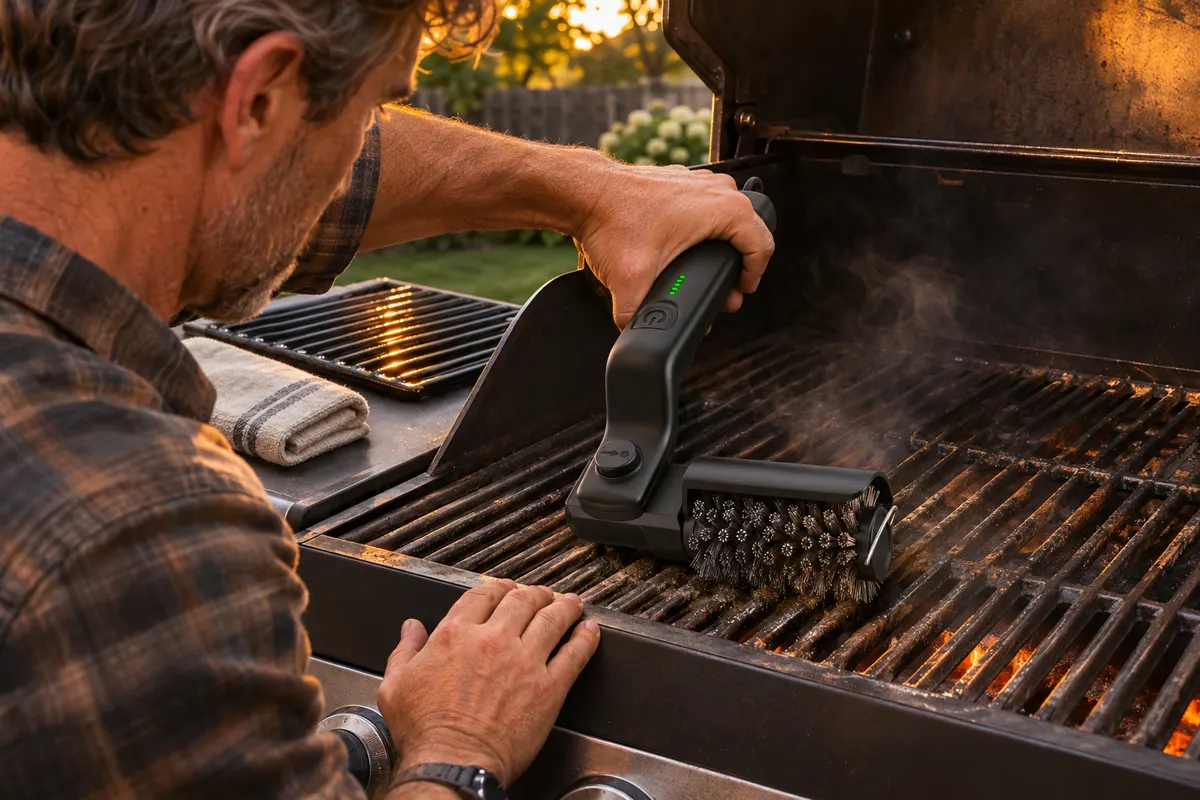
Clean porcelain grill grates by brushing them while warm and washing them a few times a season with hot water, mild dish soap and a soft pad, then drying them completely. Never use a metal scraper or spatula on the enamel. Whether a steel-bristle brush is OK depends on your grill maker: Weber approves stainless steel brushes for its porcelain-enameled cast iron grates, while Char-Broil says to use soft or nylon brushes on porcelain. Check your manual, then match the brush to the grate with the table below. For stainless steel and cast iron grates, an electric brush with anchored steel bristles such as the Joyhnny CleanLock does the scrubbing for you.
Porcelain-enameled grates are everywhere: they come on many gas grills and kettle grills because the glassy coating protects the metal underneath and releases food nicely. They also raise the most common grill-cleaning question we see: can I use a steel brush on these, or will it ruin them? The honest answer is that grill makers disagree, and that the right brush depends on what your grate is made of. This guide shows you how to identify your grate, what each maker says, and which tools fit which surface.
Step 1: identify your grate
- Porcelain-enameled cast iron: heavy, with a smooth, glossy, glass-like coating (usually black). Common on mid-range and premium gas grills.
- Porcelain-coated steel or wire: lighter rods with the same glossy coating. Common on kettle grills and entry-level gas grills.
- Bare cast iron: heavy, matte and slightly rough; needs oil to stay rust-free.
- Stainless steel: silver rods or bars that may discolor with heat but do not rust.
- Mesh racks and flat-top griddles: their own rules; see the table.
Not sure? Your grill manual or the maker’s replacement-parts page names the grate material exactly.
Step 2: what the grill makers say (they do not fully agree)
| Source | Brush on porcelain | Everyone agrees on |
|---|---|---|
| Weber (porcelain-enameled cast iron grates) | Preheat to 500–550 °F, then brush with a stainless steel bristle brush before each use; its brushes are approved for these grates | No metal scrapers or spatulas on the enamel; check brushes for loose bristles and replace them about once a year |
| Char-Broil (porcelain grates) | Do not use metal or wire brushes; use a soft-bristle or nylon brush | Gentle deep cleaning with soap and water |
| Many cooking guides | Brass bristles as a softer middle ground | Dry the grates fully to prevent rust |
Why the split? Porcelain coatings and grate designs differ from brand to brand, so each maker tests tools against its own grates. That is why the rule that matters is the one in your grill’s manual. The points every source shares are simple: no scraping the enamel with metal tools, inspect the grate after brushing, and dry it completely.
Step 3: the brush compatibility table
| Grate | Steel-bristle brush (incl. electric) | Brass brush | Nylon brush | Metal scraper |
|---|---|---|---|---|
| Stainless steel | Yes | Yes | Yes (cool grate) | OK with care |
| Bare cast iron | Yes | Yes | Yes (cool grate) | OK with care |
| Porcelain-enameled cast iron | If your maker allows it (Weber does) | Often suggested as gentler | Yes (cool grate) | No |
| Porcelain-coated steel / wire | Check the manual | Check the manual | Yes (cool grate) | No |
| Mesh racks | Yes, both directions | Yes | Yes | No |
| Flat-top griddle | Not needed | Not needed | Not needed | Yes (flat griddle scraper) |
“Cool grate” matters: nylon can melt on a hot grill, so nylon brushes are meant for a cool surface; follow the brush label. With any steel or brass brush, the safety habit from our bristle-free vs. wire brush guide applies: wipe the grate with a damp paper towel held in tongs and look before you cook.
How to clean porcelain grill grates: the routine
After every cookout (5 minutes)
- Heat it up. Run the grill on high for 10–15 minutes so residue turns to dry, brittle carbon.
- Brush warm with the tool your manual allows. Long strokes along the bars; no prying or scraping at the enamel.
- Wipe and look. A damp paper towel in tongs picks up debris and shows the surface is clear.
A few times a season (about an hour)
- Let the grates cool and remove them. Never soak or wash hot porcelain; sudden temperature changes are hard on the coating.
- Soak in hot water, then wash. Weber suggests mild dish soap with nylon or soft scrub pads; a baking soda paste helps on stubborn spots.
- Rinse and dry completely. Dry by hand or on a warm grill for a few minutes; water left in chips leads to rust.
For stainless, cast iron and flat-top routines, see our full guide on how to clean grill grates.
Signs it is time for new grates
- Flaking enamel that comes off in pieces, not just small chips.
- Rust spreading from chipped spots across the bars.
- Warped or cracked bars that no longer sit flat.
Replacement grates are listed by model on most makers’ parts pages. Many grill owners switch to stainless steel or bare cast iron at that point, which opens up the full range of steel brushes.
Our recommendation: Joyhnny CleanLock
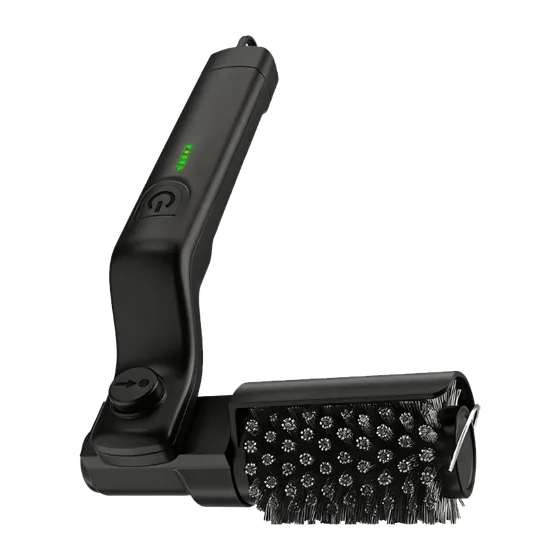
Once you know your grate, pick the brush that fits it and makes the job fast. For stainless steel and cast iron grates, and porcelain grates whose maker approves steel-bristle brushes, the Joyhnny CleanLock is the one we recommend: its motor and rotating head do the scrubbing, the anchored steel bristles are built not to shed, and the foldable head reaches the corners and the edges of the firebox. It turns the after-cook brush into a 2-minute job you will actually keep doing.
The Joyhnny CleanLock Grill Brush pairs a high-torque motor with a 360° rotating brush head, so you guide it along the grates instead of scrubbing. The adjustable, foldable head reaches corners, the reinforced steel bristles are anchored to prevent shedding, and it charges by USB-C. On the official site it costs $69.99 for one brush (half the regular $139.98) and drops to $37.49 per brush in the 4-pack, with fast shipping and a 30-day money-back guarantee.
Want the details first? Our full Joyhnny CleanLock review covers specs, the comparison with manual tools, prices with shipping and our 4.7/5 verdict.
Frequently asked questions
Can you use a wire brush on porcelain grill grates?
It depends on your grill maker. Weber recommends brushing its porcelain-enameled cast iron grates with a stainless steel bristle brush and sells steel brushes approved for them, while Char-Broil advises against metal or wire brushes on porcelain and suggests a soft-bristle or nylon brush. Follow the manual for your own grill; the rule everyone agrees on is no metal scrapers or spatulas on the enamel.
How do you deep clean porcelain grill grates?
Let the grates cool, remove them and soak them in hot water, then wash with mild dish soap and a nylon or soft scrub pad, as Weber suggests. A baking soda paste helps with stubborn spots. Rinse and dry the grates completely before putting them back.
How do I know if my grates are porcelain?
Porcelain-enameled grates have a smooth, glossy, glass-like coating, usually black, over cast iron or steel. Bare cast iron looks matte and rough and is heavy; stainless steel is silver and does not rust. Your grill manual or the maker’s parts page lists the exact grate type.
What happens if porcelain grates chip?
A chip exposes the metal underneath, which can rust. Small chips are mostly cosmetic: keep the grate clean and dry and avoid metal scrapers so the damage does not spread. Heavy chipping or flaking is a sign it is time to replace the grates.
Can I use an electric grill brush on porcelain grates?
Check two things: what your grill maker allows on its porcelain grates and what the brush maker lists. The Joyhnny CleanLock uses anchored steel bristles and is described by its maker for stainless steel, cast iron and more, so it fits grates where your manual allows a steel bristle brush.
Should I brush porcelain grates hot or cold?
Most makers recommend brushing while the grill is hot or warm, when residue turns to brittle carbon; Weber suggests preheating to 500–550 °F first. Nylon brushes are the exception: nylon can melt, so use them on a cool grate and follow the brush label.
Sources: Weber, Grill Brush for porcelain-enameled cast-iron grates (product page) and Weber customer support on grate care (preheat 500–550 °F, stainless steel bristle brush, no metal scrapers on enamel, replace brushes annually, soak and wash with mild soap and soft pads); Char-Broil, How to Clean Grill Grates (no metal or wire brushes on porcelain; soft-bristle or nylon brush). Product details from the official Joyhnny page. Checked November 24, 2026. Always follow your own grill’s manual.